





Brussels Office
Avenue Louise, 331
1000 Brussels
A lease is an agreement between an owner, known as the lessor or landlord, and a tenant for the use of a property in return for the payment of rent.
Since 2017, lease agreements have fallen within the competence of the regions, so each region is free to set its own rules for residential leases. In the Brussels-Capital Region, these rules are set out in the Housing Code, and have been in force since 1 January 2018.
In this article, OP looks at the different types of lease and their characteristics.
There are three main categories of lease for which there are very specific rules:
In addition, there is another, rarer, type of lease, the rural lease.
The main residence lease is a type of rental lease whose provisions apply as soon as the tenant uses the rented building as his/her main residence.
The leased property may be immovable or movable. A caravan, for example, can be the subject of a main residence lease.
The commercial lease is a rental agreement for a building or part of a building that the parties have agreed will be mainly used by the tenant or by a sub-tenant to operate a retail business or craft activity in direct contact with the public.
The term of a commercial lease is nine years. However, the tenant may, at the end of each three-year period, terminate the lease subject to the provision of six months’ notice by registered letter.
The rural lease, also known as the ‘farm lease’, is a rental agreement for one or more buildings that the parties have agreed will be used mainly for the tenant’s farming activity, excluding forestry.
‘Farming’ in this context means the production of agricultural produce intended primarily for sale. Like that of the commercial lease, the term of a rural lease is at least and by default nine years.
Two new leases appear on the scene: the student lease and the joint tenancy
Since 1 January 2018, there have been two new additions to the lease family: the student lease and the joint tenancy lease.
The student lease is perfectly suited to student life, because it takes account of typical events such as:
Consequently, the maximum term of a student lease is 12 months, renewable for periods of one year. In addition, the student can terminate his/her lease at any time, subject to the provision of two months’ notice. However, the same is not true for the landlord, who must provide three months’ notice and wait until the end of the lease term.
Finally, in order to sign this type of lease, the student must show the landlord an application for or proof of enrolment in a higher education institution.
A joint tenancy lease is a rental agreement with at least two tenants. To be really watertight, a joint tenancy lease now involves two elements: the joint tenancy lease itself and a house-share agreement.
First, the lease agreement entered into between the landlord and the joint tenants stipulates that the joint tenants are jointly and severally liable vis-à-vis the landlord as well as setting out various specific terms. The parties must indicate their agreement to the application of this regime.
Second, in the house-share agreement the joint tenants formalise the practical arrangements of their communal life. This document makes the joint tenants aware of their rights and obligations, but also increases each tenant’s legal security while improving their collective organisation.
Strictly speaking, there are no set rules about what is included in the house-share agreement.
However, it is recommended that it should contain the following information:
However, the joint tenants are free to also arrange other aspects of their cohabitation, such as the organisation of daily tasks, the presence of pets or musical instruments, etc.
Finally, if one of the joint tenants wishes to leave, the joint tenancy lease states that two months’ notice must be provided, without the payment of compensation, on condition that a new joint tenant is found who is accepted by the group or that an active and adequate effort has been made to find a new joint tenant.
Whatever your rental plans, OP has the right lease for you!
With OP, you will have a choice between three types of lease: residential, commercial and office. Drawn up by lawyers (in French and Dutch) and used throughout Belgium, OP leases have become models of their kind. Each lease explicitly defines the rights and duties of each party, while fairly defending the interests of both.
How can you obtain them?
You can order the lease of your choice online, on our website. The lease will be posted to you promptly. However, you can also obtain OP leases from the best points of sale in your area. You will find a list of points of sale on our website.
OP will be happy to answer all your questions about the lease reform in the Brussels-Capital Region. Feel free to contact us via our online form.
In addition, the Brussels-Capital Region has published several leaflets on the subject, which can be found at logement.brussels. You will also find useful documents there such as a model inventory and an indicative rent table.
Avenue Louise, 331
1000 Brussels

Vilain XIIII-street, 53-55
1000 Brussels

Avenue du Bourgmestre Etienne Demunter, 1
1090 Jette

Avenue Louise, 331
1000 Bruxelles
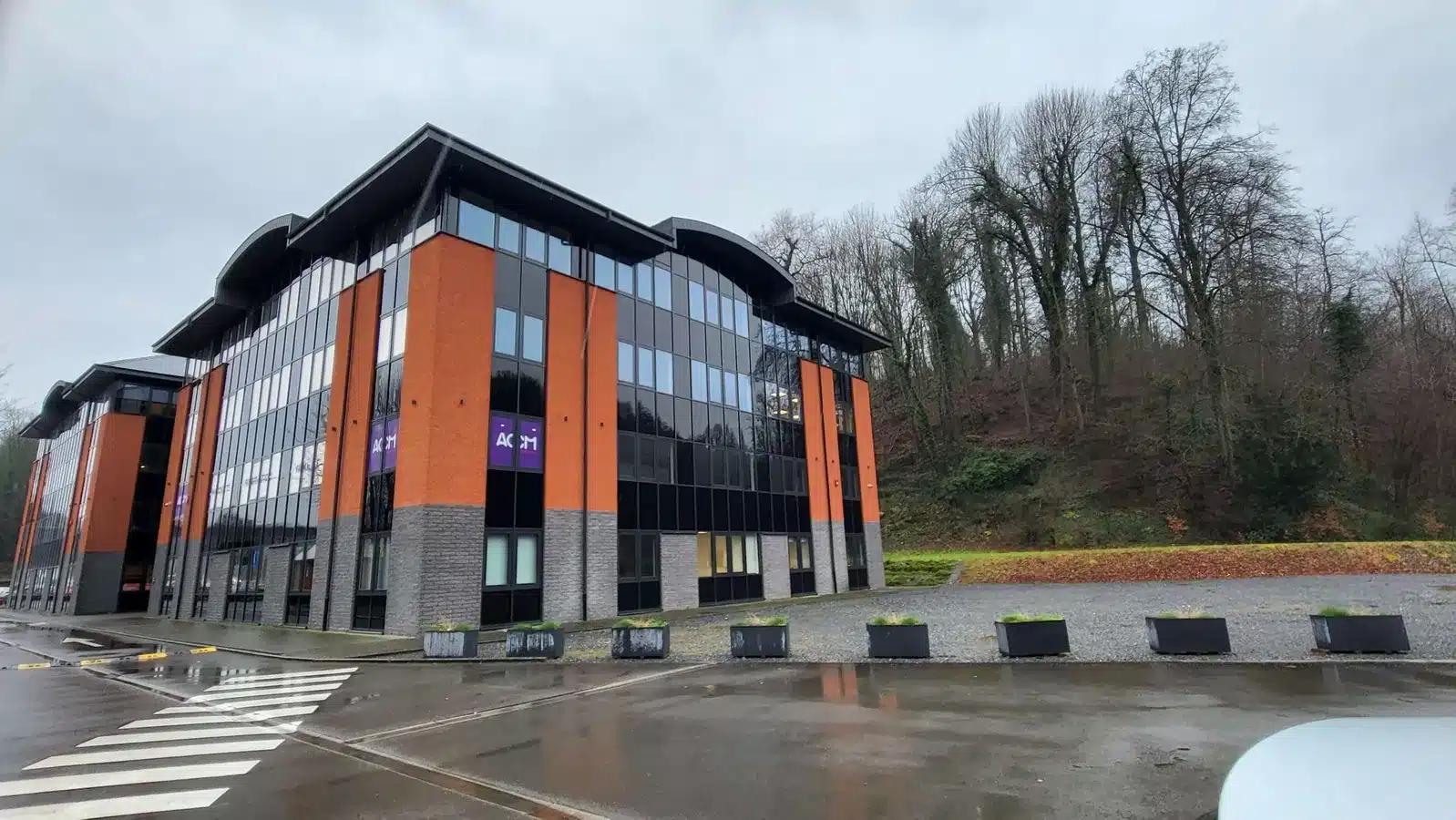
Chaussée de Liège, 652B/21
5100 Namur (Jambes)

Rue Emile Franqui, 11
1435 Mont Saint Guibert

Place de l’Equerre 33/102
1348 Ottignies-LLN&

Avenue de France 26
1400 Nivelles