Asking a Question Relating to Works at a General Assembly: What You Need to Know in Belgium
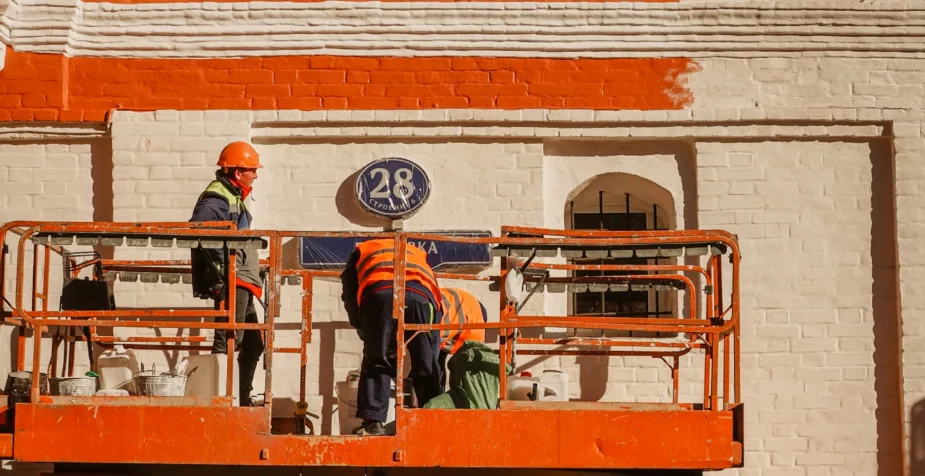
When a co-owner wishes to carry out works that affect the common parts or modify the external appearance of the building, prior authorisation is mandatory.
This authorisation may only be granted by the General Assembly (GA) of co-owners.
Neither the syndic, nor the co-ownership council may authorise this type of works on their own.
A request must be submitted before the General Assembly, at the latest 15 days after the notice of meeting has been sent.
Any request for works must be addressed to the syndic before the General Assembly, so that it can be included on the agenda.
This request must be made in writing and accompanied by all the necessary supporting documents. The more precise and well-documented your project is, the better the other co-owners will be able to make an informed decision.
Practical tip:
A well-prepared project (plans, description, impact on the common parts, possible quotations) significantly increases the chances of obtaining authorisation.
Only the General Assembly may authorise works, unless all co-owners unanimously agree outside the General Assembly.
In accordance with the Belgian Civil Code (Book 3 – co-ownership), only the General Assembly is competent to authorise:
- works affecting the common parts;
- works modifying the external appearance of the building;
- private alterations having a collective impact.
Each co-owner must therefore ensure that their request complies with legal requirements and the co-ownership regulations.
How to Ask a Question at a General Assembly?
Co-owners meet in an ordinary General Assembly at least once a year.
On this occasion, a co-owner may have a written question included on the agenda.
To do so, the request must be notified to the syndic before the notices of meeting are sent.
It is also possible, in the event of an emergency or a specific situation, to convene an extraordinary General Assembly, dedicated solely to a specific item.
The Notice Period: A Key Element in Belgium
In Belgium, the syndic must send the notice convening the General Assembly at least 15 calendar days before the date of the meeting (Article 3.87 of the Civil Code).
The notice includes in particular:
- the date, time and place of the GA;
- the detailed agenda (including the written questions of the co-owners);
- the arrangements for consulting supporting documents;
- the documents required for decision-making (quotations, plans, reports, etc.);
- the proxy form.
If the request relating to works reaches the syndic too late, it cannot be included on the agenda and will have to be postponed to a subsequent General Assembly.
How to Have a Question Relating to Works Included on the Agenda?
To have your request included, it is recommended to send the syndic a clear and precise written request (by letter or email).
Two options are available to you:
- wait for the annual ordinary General Assembly;
- request the convening of an extraordinary General Assembly, at your own expense, if the situation justifies it.
For the question to be valid, it must:
- relate to a single subject;
- be worded without ambiguity;
- be accompanied by a draft resolution.
The Draft Resolution: An Essential Element
In the case of a request for works, Belgian law requires the submission of a draft resolution, i.e. a formal proposal submitted to a vote.
This document must specify in particular:
- the exact nature of the works;
- their location;
- their impact on the common parts;
- any changes to the external appearance;
- technical or professional guarantees.
Practical tip:
Calling on an architect or a professional can strengthen the credibility of the project and reassure the other co-owners.
Can a Question About Works Be Asked Directly During the General Assembly?
Yes, a co-owner may ask an oral question during the General Assembly.
However, if this question is not included on the agenda, it cannot be put to a vote.
For a decision to be taken, the question must be formalised and included on the agenda of a subsequent General Assembly.
What Topics Are Generally Discussed at a General Assembly?
The General Assembly deals in particular with:
- financial management (accounts, budget, charges);
- legal matters (syndic, internal regulations, disputes);
- maintenance and works (renovation, safety, energy performance);
- issues related to the day-to-day life of the co-ownership.
What Majorities Are Required to Authorise Works in Belgium?
The required majorities vary depending on the nature of the works, in accordance with the Belgian Civil Code:
- routine decisions: simple majority;
- works affecting the common parts or the external appearance: reinforced majority;
- works resulting in a significant modification or an appropriation of the common parts must be approved unanimously.
The syndic always specifies the applicable majority before the vote.
What to Do if the General Assembly Refuses the Request?
After the General Assembly, the syndic sends the minutes summarising all decisions taken, within a period of one month.
If your request for works has been refused, you may:
- challenge the decision before the Justice of the Peace within a period of four months from the communication of the minutes;
- ask the judge to authorise the works if the refusal is deemed unjustified.
Attention:
Abusive appeals may result in the payment of damages in favour of the co-ownership.